“Cats
are part of the landscape in Jacksonville, they are part of our
community and that’s how we deal with them,” says Scott Trebatoski,
division chief for Animal Care and Protective Services in Jacksonville,
Florida. He believes this attitude explains the support for the Feral Freedom program in Jacksonville.
“Cats
are part of the landscape in Jacksonville, they are part of our
community and that’s how we deal with them,” says Scott Trebatoski,
division chief for Animal Care and Protective Services in Jacksonville,
Florida. He believes this attitude explains the support for the Feral Freedom program in Jacksonville.
The program, begun in 2008, is a collaboration between the City of Jacksonville, First Coast No More Homeless Pets, the Jacksonville Humane Society, and Best Friends Animal Society. Feral Freedom has saved the lives of thousands of cats by using trap/neuter/return (TNR) to divert community cats from the animal control system.
Much of the credit for the outstanding success of the program belongs to Trabatoski.
(Scott Trebatoski is true feline friend)
“After working with Scott, we now have an excellent relationship and find that Scott has turned Jacksonville into a great partner in our mission to end euthanasia of dogs and cats in Jacksonville,” says Rick DuCharme, founder of First Coast No More Homeless Pets. “Scott is committed to finding innovative ways to save as many lives as possible.”
 Trebatoski
got into animal control through the backdoor. He was working in human
resources in Ft. Myers where the county animal control agency had been
without a director for 18 months. He stepped in, temporarily he thought,
to work out some personnel issues.
Trebatoski
got into animal control through the backdoor. He was working in human
resources in Ft. Myers where the county animal control agency had been
without a director for 18 months. He stepped in, temporarily he thought,
to work out some personnel issues.
As he says, “Animal control has such a broad scope, it’s infectious when you start working in it. It’s hard to not continue. So when I was done fixing stuff, I continued working there.”
He moved on to Jacksonville when Feral Freedom was in its infancy.
“He was onboard right away with it and has been behind it 100%,” says Danita Thompson, Jacksonville cruelty investigator.
In the Feral Freedom program, community cats who are humanely trapped by animal control are taken to First Coast for spaying and neutering. The cats bypass the animal control facility rather than becoming unfortunate statistics. First Coast then returns the cats to the area they were trapped.
 “The staff’s behind the program and it has been a huge boost for morale,” Trebatoski says.
Before Feral Freedom, the shelter was terribly overcrowded, cats were kept two or three in a cage, which lead to sick cats and a high euthanasia rate. Thompson, who started with the agency working with the cats in the kennels, says, “Euthanizing dozens of cats everyday takes an emotional toll on anybody, especially somebody who is doing the job because they love animals.”
Because community cats are no longer being admitted to the shelter, overcrowding is a thing of the past, euthanasia rates for cats are down by 62 percent, owner surrenders are down by 31 percent and cat adoptions are up 40 percent.
There are no city funds involved with the program and Trebatoski estimates savings to the city “may be as much as $150,000 per year from a combination of not housing the cats for three to five days then euthanizing and disposing of them.”
Some components of the program have changed through experience.
Trebatoski credits the city for writing the ordinance to allow for experimentation and thinking outside the box.
 “We’ve
had to make adjustments,” notes Trebatoski. “Things we thought were
going to work didn’t work and other things we tried did work.”
“We’ve
had to make adjustments,” notes Trebatoski. “Things we thought were
going to work didn’t work and other things we tried did work.”
In the beginning all the cats were microchipped. The idea was to identify cats repeatedly being trapped. Repeated trappings didn’t occur and so microchipping was dropped for substantial financial savings to First Coast - savings that can be used for more spay/neuter surgeries.
If animal control traps an ear-tipped cat, it is now released without being taken to First Coast. Experience also led those involved to let the results of Feral Freedom speak for themselves, rather than doing an extensive public education campaign. Jacksonville’s partnership with First Coast has evolved as well. Trebatoski feels that his agency is now a full partner in the program.
Trebatoski has fielded numerous phone calls and a dozen personal visits from representatives of other communities thinking of starting a similar program.
“He is somebody other animal control agencies can look to about how to address issues,” says Shelly Kotter, Best Friends’ Focus on Felines campaign specialist.
 Rather
than trying to copy Jacksonville’s program, Trebatoski believes every
community will need to develop their own program to meet their own
issues and needs. He suggests taking some ideas from Jacksonville and
assembling a unique program that works for them.
Rather
than trying to copy Jacksonville’s program, Trebatoski believes every
community will need to develop their own program to meet their own
issues and needs. He suggests taking some ideas from Jacksonville and
assembling a unique program that works for them.
One of the markers of the program’s success, Trebatoski believes, is the drop in kittens brought into the animal control system during “kitten season.”
From her days on the frontline Thompson recalls, “Prior to Feral Freedom, I would spend half my day picking up newborn litters of kittens and kittens less than two months old.” Most of those kittens were sick or too young to survive and were euthanized upon intake. Now she says, “We are seeing positive results in the numbers of kittens we are bringing in.” They are also see positive results in an increase in the number of kittens being adopted.
As Thompson says, “Feral Freedom has been a very positive change for the city, not just in terms of operation for animal control but in terms of the humanity involved.” All those who love cats heartily agree with her.
How you can help:
- Your donation to the Florida Feral Freedom program will save lives.
- Get more information about First Coast No More Homeless Pets.
- Join the Best Friends Focus on Felines campaign and find out how you can help community cats in your area.
Photos courtesy of First Coast No More Homeless Pets and Scott Trebatoski


|
Cat Fancy july 2010.pdf Size : 12.812 Kb Type : pdf |
|
|
will work for food.pdf Size : 3.613 Kb Type : pdf |
|
|
Georgia_-_Madison Ordinance.pdf Size : 0.043 Kb Type : pdf |
Yips and prowls close to home? They're not going away

The Atlanta Journal-Constitution
Listen. Those yips in the dark, the rustle of something in the moon-silvered night? Dogs?


Related
Listen again. Dogs don’t sound like that, but coyotes do. And right now there are plenty to hear.
This is the birthing season for the coyote, a onetime rural resident who’s moved to the suburbs and into many city neighborhoods and finds them to his liking. Across metro Atlanta — across the continental United States, in fact — female coyotes are having litters right now. As they nurse the pups, the males, accompanied by a few of last year’s offspring, are patrolling their turf, keeping it safe from outsiders.
That turf may very well include your back yard, and experts say there is little you can do about that. Get rid of a coyote, and another one is likely to take its place. Get rid of a coyote family, and things may quiet down — for a while. Then, one night, you’ll hear another yip.
Because their families are growing, Canis latrans are hunting more than ever just now. Watch your pets.
John Underwood and Chip Elliott, who have more than two decades of coyote-trapping experience between them, know.
“They’ll eat anything,” said Elliott, who operates Atlanta Wildlife Relocators. “They’re like possums — except they eat possums, too.”
“They’re very smart,” added Underwood, owner of Atlanta Animal Evictions. “And, no matter how smart we tell you they are, it does not do them justice.”
Pooling their money
People who live at the end of West Paces Ferry Road, near the Chattahoochee River, are neighbors with a shared concern. When one makes a sighting, the e-mails begin: I saw a coyote this morning ...
Kim Noonan has been swapping news of coyote sightings with her neighbors since she and her husband, Tom, bought their home six years ago. What was at first a novelty became a nuisance, then a heartache. Three years ago, a coyote killed Pete, the Noonans’ Jack Russell terrier.
When the sightings become more frequent than they like, the Noonans and their neighbors pool their money and call a trapper to remove the animals and kill them, which the law allows. They recently hired one. In recent years, other neighborhoods and municipalities across metro Atlanta also have tried trapping, shooting, relocating.
Coyotes, says an exasperated Noonan, are an expensive fact of urban life. Costs of removing coyotes vary, but getting rid of a family can easily exceed $1,000. “It’s upkeep, you know?” said Noonan, who keeps a close watch on the family’s three remaining dogs. “It seems like they are more and more prevalent.”
An ‘allegory of Want’
Coyotes once were indigenous solely to the American West, where they subsisted on anything that crossed their paths. People back East became acquainted with them in 1872 with the publication of “Roughing It,” Mark Twain’s account of his western travels.
“The coyote is a long, slim, sick and sorry-looking skeleton,” Twain wrote. “He has a general slinking expression all over. The coyote is a living, breathing allegory of Want.”
Hunger may be what drove it to migrate. Biologists say the coyote began expanding its range about a half-century ago. Today, they live in every state in the continental United States, plus Alaska. Coyotes arrived in Georgia in the 1970s, and have taken root like kudzu.
Steve Smith, a biologist with the U.S. Department of Agriculture’s Wildlife Services, is director of the agency’s Georgia office, based in Athens. He agrees with coyote trappers: The animals are like the tides, unstoppable.
“They’ve completely redefined the word ‘adaptable,’ ” he said.
The state Department of Natural Resources doesn’t keep track of coyote populations. They aren’t a protected species, meaning they can be hunted or trapped year round. Law forbids poisoning the animals, but beyond that, “It’s pretty much open season on them,” said DNR biologist Don McGowan.
McGowan, who’s routinely called to Atlanta’s suburbs to investigate sightings of bears, bobcats, alligators and other creatures, believes metro Atlanta’s coyote population may exceed those in rural areas. The pickings here are better. Coyotes, he noted, eat creatures we don’t like having around, notably mice and rats. They also gobble up road kill, rabbits, chipmunks, voles, insects and fruit, as well as the contents of trash cans and pet-food bowls — pets, too.
“They have a very flexible diet,” he said. “Sometimes, that can mean a house cat.”
Consider the story of Spooky Jones.
A lucky cat
Cydney Jones was on the phone, talking to her mom. The Alpharetta resident left her back door ajar so her five cats could take in the early-fall morning sun on the deck.
“I saw something run past the window — fast,” said Jones. A heartbeat later, Sarge, one of her big cats, scrambled back inside and hid behind a shelf. “That’s when I knew something was wrong.”
She ran up the stairs and peered through a window at her front yard. A slender animal loped across it. A coyote. In its muzzle the coyote held something black and furry — Spooky, a friendly stray she’d adopted nearly a decade earlier. Jones ran into the yard and screamed: “You put him down!”
The startled coyote dropped the cat and fled. Jones packed the battered cat into a carrier and took it to emergency care.
Spooky survived the 2009 attack, but not without a series of operations, including a procedure to strengthen and straighten its severely twisted spine. Jones is reluctant to say how much it cost to put Spooky back together again: “I think people would be mortified if they knew the price.”
The cat is OK, if a bit clumsier than before. Today, he prowls a back yard that has a recently erected, 6-foot-tall wooden fence, a coyote barrier.
Most cats, said Dr. Jean Sonnenfield, who operated on Jones’ pet, aren’t as lucky as Spooky: They just vanish, a meal for a hungry predator.
Sonnenfield, who works in the emergency room at Georgia Veterinary Specialists in Sandy Springs, estimates that she treats three to six animals a year that were mauled by coyotes. The real number, she said, might be higher. Her patients aren’t capable of describing their attackers, so what some vets assume are dog attacks may be wounds inflicted by coyotes.
And missing animals? “I’m suspicious about all those ‘Missing Cat’ signs I see everywhere,” she said.
Those cats, Sonnenfield thinks, won’t be found.
Extended family
A mother coyote typically has three or more pups. In seasons when the population is depleted, biologists say, she may deliver more. About a week after they’re born, the mother coyote will move their den; the scent of their births may attract predators.
The father coyote, meanwhile, stakes out an area of several square miles. Like all canines, he marks its boundaries, sending an unmistakable message to other coyotes to keep out. He often has two or three coyotes, born to the family the previous year, to help out. They patrol the area, catch food for the nursing mother, and keep an eye on the pups when mom needs to take a break.
In fall, when the pups are adolescents, the father coyote drives off the children from the previous year. Next spring, the pups will take over as protectors and mother’s helper. It is, say the people who study these animals, a sublime arrangement. They are bound by blood and instinct, intellect and wile.
As for us humans? We’re bound to live with them, like it or not.
So listen. Those are your neighbors calling, and they’re hungry.
Coyote resources
www.georgiawildlife.com/node/1391: Coyote facts from the Wildlife Resources Division, Georgia Department of Natural Resources
www.awareone.org: Atlanta Wild Animal Rescue Effort has a primer on dealing with urban coyotes
Coyote-proofing your home
Experts say you can make your home less attractive to coyotes. Michael Ellis of Atlanta Wild Animal Rescue Effort recommends the following:
● Keep an eye on your pets. Don’t allow them to wander from the yard.
● Don’t leave pet food bowls outdoors. Even bringing them in at night won’t work. Coyotes are drawn to the lingering scent of pet food.
● Get lock-top garbage cans.
● Attach garbage cans to the house or fence, or build an enclosure for them.
● And this: Remember that you are part of the natural order. Most animals consider human beings predators, so act like one. If you encounter a coyote, “Clap your hands, yell,” said Ellis. “Scare it.”
He also has these suggestions for elected officials:
● Revise ordinances, where applicable, to require garbage containers outside restaurants to have locking tops.
● Require homeowners to place their garbage on the curb only on the day crews pick up — not the night before.
● Establish a leash law for cats.
3) TNR approved in 9-1 vote
The Athens-Clarke Commission ended an
emotional debate - for now - by voting Tuesday to approve a
controversial method of controlling feral cats that eat wildlife and
spread disease.
Trap-neuter-release or trap-neuter-return, commonly called TNR, is legal in Athens after the 9-1 vote.
TNR practitioners can now register with the county to feed, trap, vaccinate and sterilize feral cats with permission from landowners – an alternative to euthanizing them or allowing the cat population to grow unchecked – with the help of $10,000 in taxpayer-funded vouchers for rabies vaccine and sterilization.
“It’s doing something, and I believe it’s doing the right thing,” Commissioner Mike Hamby said.
TNR may be a way to lower Athens’ feral cat population – estimated in the thousands – without hiring anyone or spending much money, Commissioner Alice Kinman said.
Commissioner Doug Lowry, who voted against TNR, made a motion to form a committee to study the issue, but it died for lack of a second.
Commissioners Ed Robinson and Lynn voted for TNR but, in a separate vote, against the $10,000 for vouchers. The money could be better spent on something else, Lynn said.
Commissioner Harry Sims called the whole debate overblown.
“If we had as much compassion for people out there tonight sleeping under bridges as we did for cats, we’d probably be better off as people,” Sims said.
Animal activists split acrimoniously on TNR, peppering commissioners and media outlets with hundreds of letters, e-mails, phone calls and public comments.
Kelly Bettinger, who founded a University of Georgia TNR group, said the feral cat population in managed colonies on campus, where local laws do not apply, has dropped by half since 2006 because tame cats were adopted out or returned to their owners, some cats have died and no kittens have been born.
TNR critic Steve Holzman, though, called it “voodoo cat-onomics” and said believing a TNR practitioner’s study is like believing a study done by Scientologists on the effectiveness of psychiatry.
Critics told commissioners they are ignoring scientific consensus that TNR does not work and listening only to TNR advocates, not veterinarians and wildlife biologists who oppose it.
“If this legislation passes, I won’t be surprised if the teaching of evolution is banned after consulting only with intelligent design advocates,” biologist Joel McNeal said.
Vanessa Lane, president of the local Audubon Society, questioned why the commission fast-tracked the law. She urged them to start a public education campaign urging pet owners not to abandon their cats.
“Why are we throwing money at the symptom and not the problem?” Lane said.
Mayor Heidi Davison said she talked to both supporters and opponents, not just the UGA TNR group, before introducing the law.
“This is not something that happened overnight,” she said. “This is not something that happened in a vacuum.”
Commissioner Kelly Girtz acknowledged critics’ concerns, but said TNR volunteers would not be allowed to simply feed cat colonies, allowing them to grow. The TNR law calls for a committee of veterinarians, wildlife experts and TNR advocates to meet in a year to review TNR’s effectiveness, and the commission will return to the issue in 2013.
Davison asked scientists who oppose TNR to collect data and conduct a local study to make their case.
Robinson said he wants the committee to look at having county animal control officers pick up feral cats. Officials say the Animal Control Division does not have the staff, money or shelter space to handle feral cats, and the Athens Area Humane Society stopped accepting them last year to become a no-kill shelter.
Putting animal control in charge of feral cats could cost half a million dollars, Davison said.
In other business, the commission:
∙ Voted unanimously to table until next month regulations requiring pawn shops to keep electronic records and hold items for 30 days before selling them to make it easier for police to find out if they are stolen. Pawn shop owners told the commission they did not have enough time to study the proposed regulations.
∙ Voted unanimously to spend $483,000 from reserves to relieve overcrowding at the Clarke County Jail by housing inmates in other counties’ jails.
∙ Voted 9-1 to allow a developer to withdraw plans for a gas station at West Broad Street and Colima Avenue. Commissioner George Maxwell voted against the withdrawal, saying he wanted a vote to deny the rezoning request instead.
∙ Voted unanimously to approve a concept for a new Athens-Ben Epps Airport commercial terminal off Beaverdam Road.
∙ Voted unanimously to allow commissioners to delay the demolition of a historic building to allow time for public input and finding and alternative to tearing it down.
EDITOR'S NOTE: A previous version of this article contained a typo in a quote from Mayor Heidi Davison.
 |
Atlanta Community Cats | |
|
||


 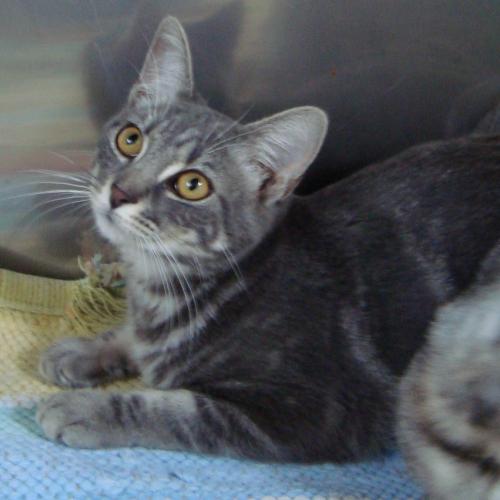
 finding good homes for good kitties 
 
Win $25,000 for Shelters and Rescue Groups!
Plus 50 entrants will win a six-month supply of Advantage® or K9 Advantix®. Enter now!
|
 Red-White
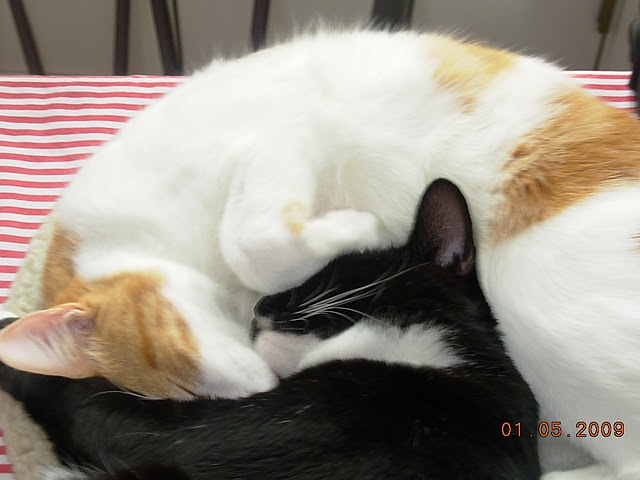
has been badly battered and was found in a black plastic garbage bag.
Spent 3 weeks in kittie hospital to heal after operation for a broken
hip. He is the sweetest cat despite being betrayed by humans. Black-White was rescued from a feral colony when sick with pneumonia. A very clever and affectionate pet, always ready to play. click logo or photo for link to website Atlanta Pet Rescue and Adoption  

 
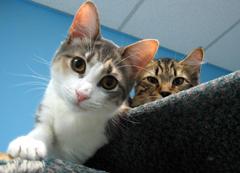
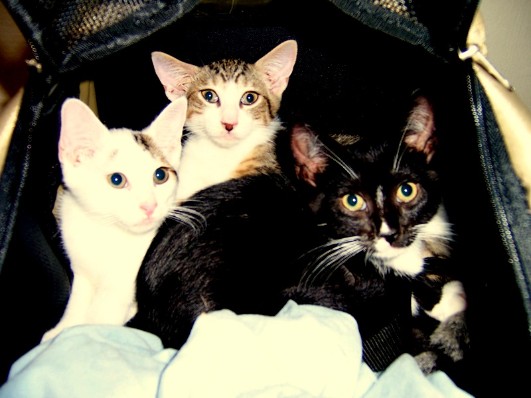 WARNING this is what happens to unwanted pets not for the faint at heart WARNING An Animal Shelter Story 100,000 pets killed in metro Atlanta animal shelters each year click picture of kittens for You-Tube link all the kittens in the picture above did get good forever-homes
| |||||||||||||||||||||||||||||||||||||||||||||||


 Click here for